











If you’re reading this, you may be thinking,“Should I remove that mole or skin tag?”
Or perhaps you’re curious about what the procedure actually involves.
As Dr. Sejal Saheta, leading dermatologist at InUrSkn Skin Hair & Body Clinic, Mumbai, I’ve helped hundreds of patients safely and confidently undergo mole removal, wart removal, and skin tag removal.
In this guide, I’ll walk you through every step—from what to expect before the procedure to recovery and aftercare tips— so you can make an informed decision.
What Is a Mole Removal Procedure?
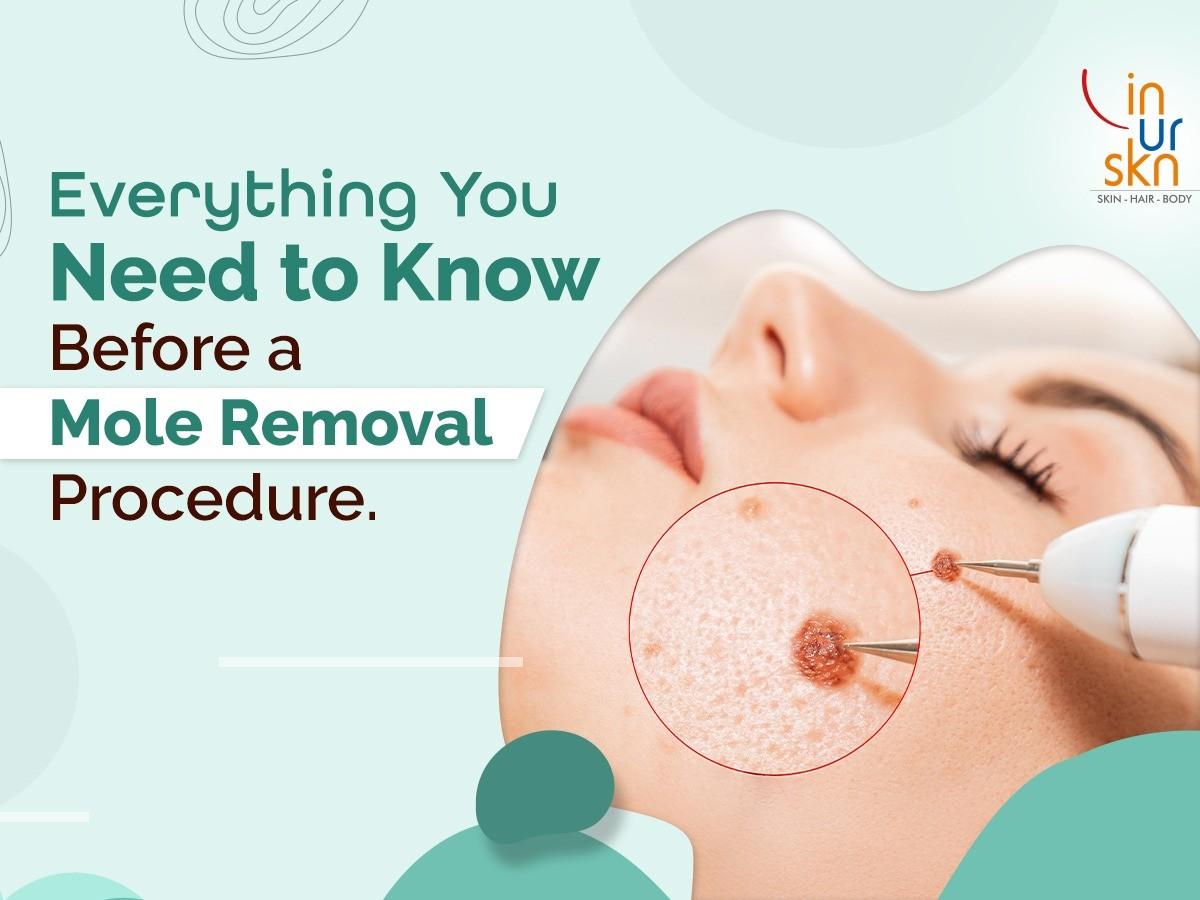
A mole removal procedure is a safe, dermatology-performed treatment that eliminates unwanted moles, warts, or skin tags.
Moles are collections of pigment-producing cells (melanocytes) that can appear anywhere on the body. While most are harmless, some people choose to remove them for cosmetic, comfort, or medical reasons.
At InUrSkn, Dr. Sejal Saheta offers both laser mole removal and cosmetic mole removal using advanced techniques that ensure precision, minimal scarring and quick recovery.
Who Should Consider Mole Removal?
You may benefit from mole removal in Mumbai if:
- A mole changes size, shape or colour.
- It bleeds or irritates due to friction.
- You’re concerned about its appearance or growth.
- Your dermatologist recommends removal for evaluation or biopsy.
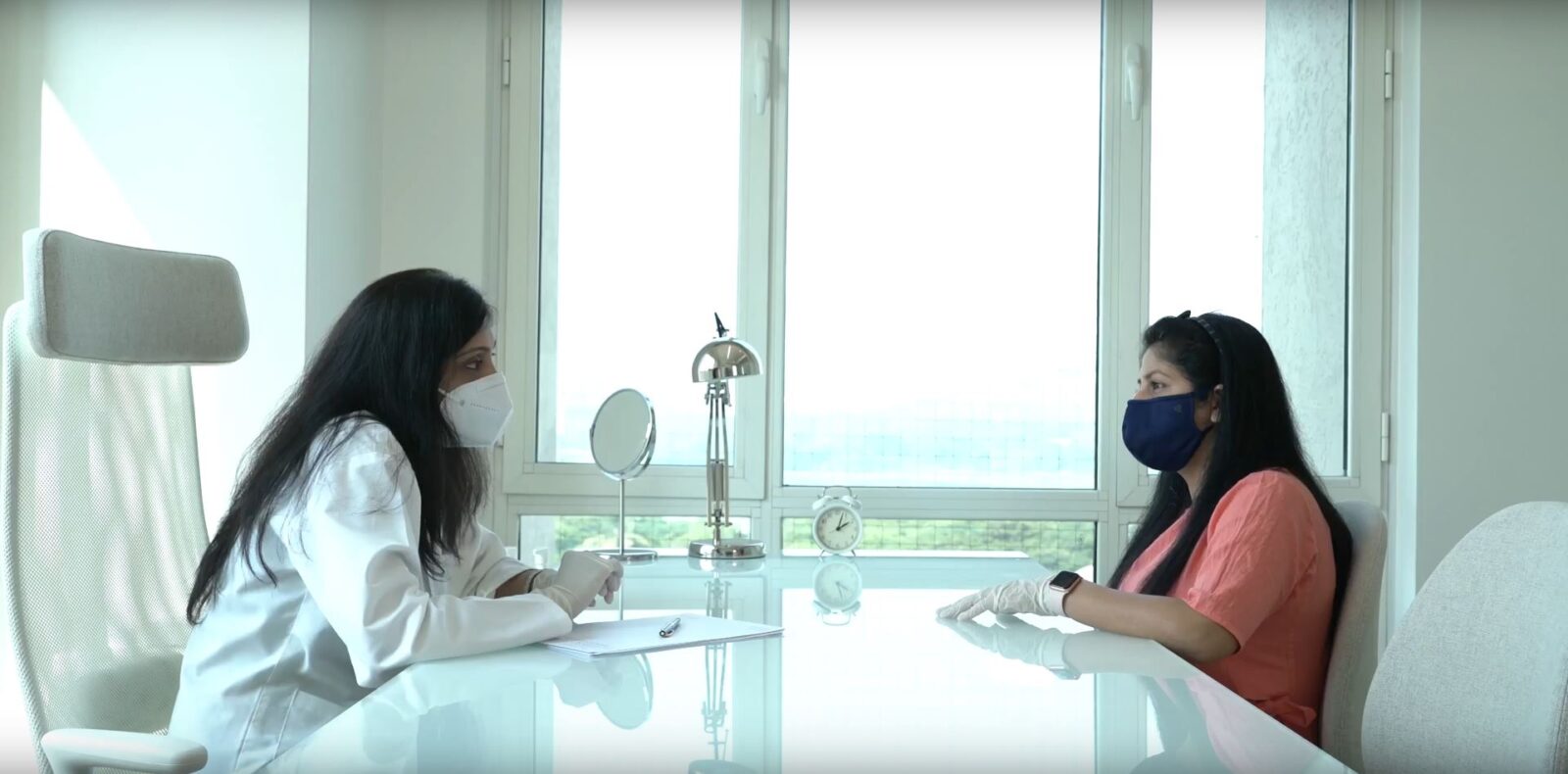
Every patient at InUrSkn undergoes a detailed consultation with Dr. Sejal Saheta, where she assesses the mole using dermatoscopy and advises on the most suitable method.
Key Benefits of Mole, Wart & Skin Tag Removal
- Improved skin appearance and smoothness.
- Greater confidence and a sense of ease.
- Reduced irritation from rubbing or clothing.
- Prevention of complications in atypical moles.
- Permanent results when performed professionally.
At InUrSkn Mumbai, we also provide wart removal and skin tag treatment for a complete skin-clarity solution.
| Method | What It Involves | Ideal For | Key Benefits | Considerations |
|---|---|---|---|---|
| Surgical Excision / Shaving | Local anaesthetic; mole cut or shaved off | Deep or raised moles | Complete removal; can be tested | May leave a fine line scar |
| CO₂ Laser Removal | Laser vaporises layers | Flat or superficial moles | Quick; minimal bleeding & scarring | May need repeat sessions |
| Radiofrequency Cauterisation | Controlled heat removes mole | Small raised moles or skin tags | No stitches; minimal downtime | Mild odour or tingling during treatment |
| Cryotherapy | Freezing with liquid nitrogen | Tiny skin tags or warts | Fast and effective | Temporary redness or light patch |
Dr. Sejal Saheta chooses the best method depending on mole type, depth, and your skin tone.
How to Prepare for Mole Removal
Dr. Sejal Saheta’s pre-procedure checklist:
- Consult first – Skin exam + discussion of method and results.
- Avoid blood thinners – Only if approved by your physician.
- Protect from sun – Avoid tanning and heavy sun exposure.
- Clean skin – No creams, oils, or makeup on the treatment day.
Plan a light schedule – Minor redness may appear post-treatment.
During the Procedure
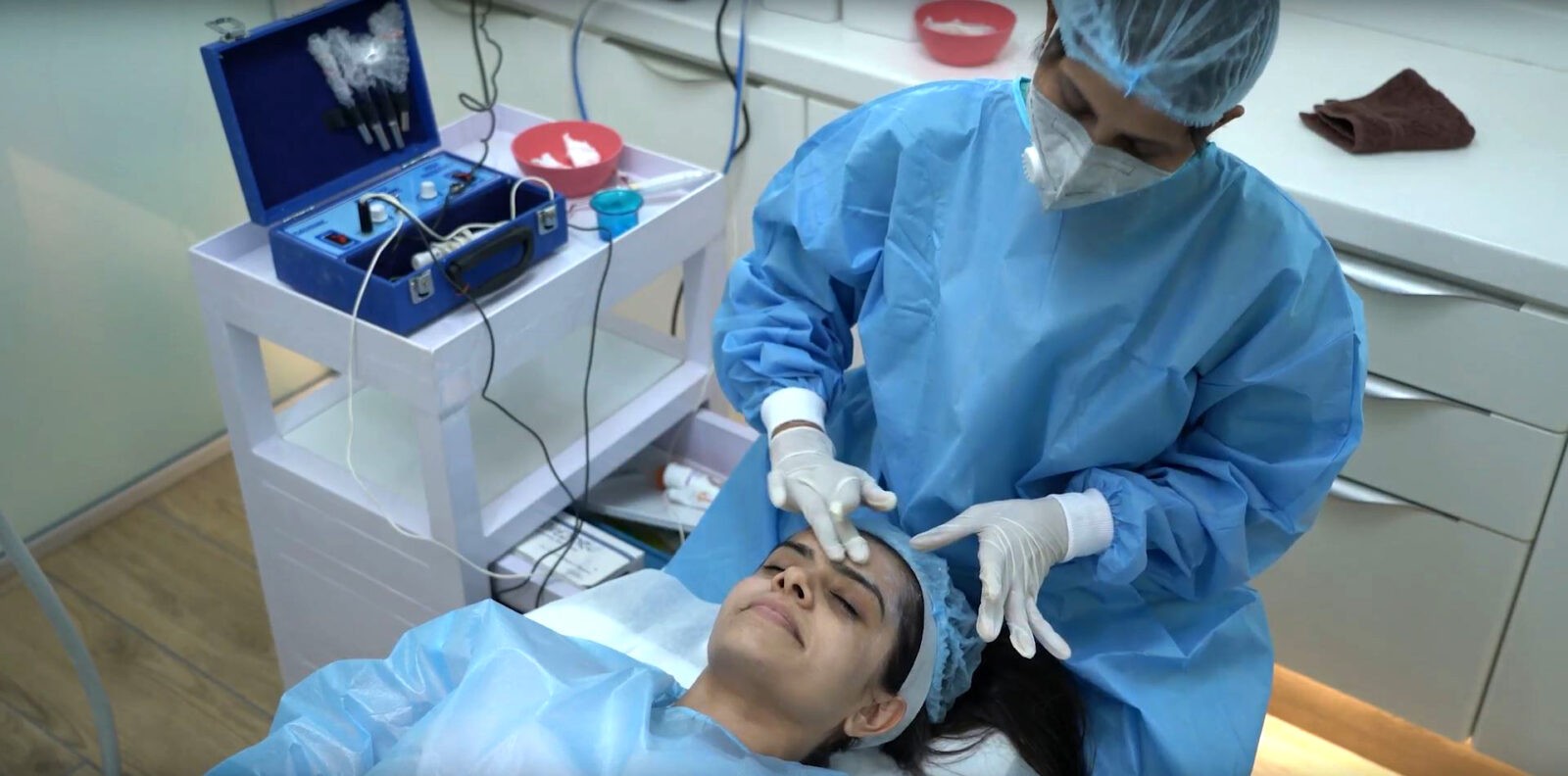
- Local anaesthetic ensures painless comfort.
- The mole is carefully removed using the chosen method.
- A sterile dressing is applied; no hospital stay is required.
Most mole removal procedures in Mumbai take under 30 minutes.
Recovery & Aftercare Tips
Dr. Sejal Saheta emphasises good aftercare to ensure a smooth, scar-free recovery:
- Keep the site clean and dry for 24 hours.
- Use the prescribed healing ointment regularly.
- Avoid scratching or friction.
- Apply broad-spectrum SPF 30+ daily.
- Follow up as advised for stitch removal or review.
Most patients heal in 7 to 14 days, with redness fading gradually.
Possible Side Effects
- Mild redness or swelling (temporary)
- Fine scab formation
- Slight pigmentation change
- Rare infection or recurrence
When performed by an experienced dermatologist like Dr. Sejal Saheta, side effects are minimal and well-managed.
Mole Removal Before and After
Post-treatment, expect slight pinkness that fades as new skin forms.
At InUrSkn, before-and-after mole removal photos help patients see the visible improvement.
For those prone to scarring, Dr. Sejal Saheta may recommend silicone gels or laser resurfacing once healing is complete.
Why Choose InUrSkn Mumbai?
- Led by Dr. Sejal Saheta, one of Mumbai’s most trusted dermatologists
- Advanced CO₂ Laser & RF technology for accuracy and safety
- Customised care plans for every skin type
- Minimal downtime and natural-looking results
Patients across Mumbai trust InUrSkn Skin Hair & Body Clinic for mole removal, wart removal, and skin tag treatment that combine medical safety with aesthetic excellence.
Final Thoughts
A mole, wart, or skin tag can affect how you look and how you feel. The good news? It’s easy to treat safely under expert hands.
If you’re considering mole removal in Mumbai, book your consultation with Dr. Sejal Saheta at InUrSkn Skin Hair & Body Clinic — and take the first step toward smoother, clearer skin.
Call or book online today for a personalised consultation.
Quick Q&A on Mole Removal (by Dr. Sejal Saheta)
Q1: Does mole removal hurt?
No. The area is numbed using local anaesthesia, so you’ll feel no pain — just mild pressure or warmth depending on the technique.
Q2: Will the mole come back after removal?
If the mole is completely removed, recurrence is rare. Dr. Sejal Saheta ensures full removal and, where needed, sends the tissue for analysis.
Q3: How long does it take to heal?
Most people heal within 1–2 weeks. Laser methods typically recover faster than surgical excision.
Q4: Can I remove a mole at home?
Absolutely not. DIY removal can lead to infection, scarring, or incomplete removal. Always see a qualified dermatologist in Mumbai for mole removal.
Q5: Are there scars after mole removal?
Minor scars may occur but fade with time. Proper aftercare and topical treatments prescribed by Dr. Sejal Saheta helps minimise marks.


 Call us
 Book Appointment
 Enquire
 Location


