











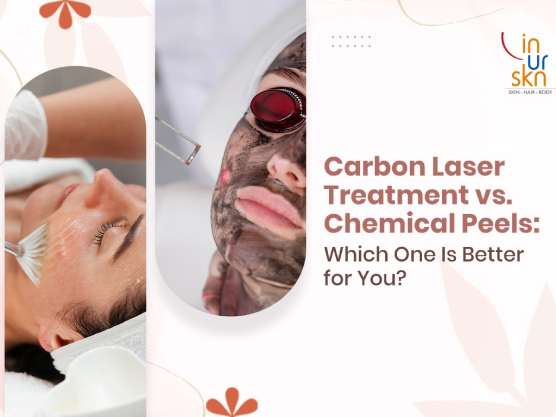
Professional skin treatments like carbon laser treatment and chemical peel treatment have become popular solutions for acne, pigmentation, uneven tone, and dull skin. Choosing between carbon laser treatment and chemical peel treatment can be confusing, especially when both promise clearer, brighter skin. At InUrSkn Skin Hair & Body Clinic, Mumbai, we often guide patients based on skin type, concern severity, and lifestyle needs—because the right treatment is always personalized.
Both procedures are dermatologist-approved and highly effective, but they work differently and suit different skin goals. Understanding how each peel works—and what they have in common—can help you make an informed decision with your dermatologist.
What Is a Carbon Laser Peel?
A carbon laser peel (often called a Hollywood peel) is a non-invasive laser-based treatment designed to deeply cleanse the skin and improve texture.
A layer of medical-grade carbon lotion is applied to the face. This carbon absorbs oil, dirt, and impurities from pores. When laser energy is passed over the skin, it gently heats and vaporizes the carbon particles, removing dead skin cells and unclogging pores.
Carbon Laser Peel Is Best For:
- Oily and acne-prone skin
- Enlarged or clogged pores
- Blackheads and excess oil
- Instant glow and skin brightening
This treatment has minimal discomfort and almost no downtime, making it ideal for people with busy schedules.
What Is a Chemical Peel Treatment?
A chemical peel treatment involves applying a medical-grade chemical solution to exfoliate the outer layers of skin. Depending on the formulation, peels may be superficial, medium, or deep.
Chemical peels accelerate cell turnover and stimulate collagen production, helping to improve deeper skin concerns over time.
Chemical Peel Treatment Is Best For:
- Pigmentation and tanning
- Acne scars and marks
- Uneven skin tone
- Fine lines and dull skin
Some peels may cause mild peeling or redness for a few days, but results are often longer-lasting.
Carbon Laser Treatment vs. Chemical Peel: Key Differences
| Factor | Carbon Laser Treatment | Chemical Peel Treatment |
|---|---|---|
| Method | Laser-based exfoliation | Chemical exfoliation |
| Downtime | Minimal to none | Mild peeling possible |
| Results | Instant glow | Gradual improvement |
| Best For | Oily skin, pores, acne | Pigmentation, scars |
| Sensation | Mild warmth | Mild stinging (varies) |
Which Peel Should You Choose?
There is no single “better” option—only the right treatment for your skin.
Choose carbon laser peel if you want quick glow, oil control, and zero downtime.
Choose chemical peel treatment if your concern is pigmentation, acne scars, or uneven skin tone.
In some cases, dermatologists may recommend combining both treatments in a planned sequence for enhanced and long-lasting results.
Final Thoughts
Both carbon laser treatment and chemical peel treatment are effective, dermatologist-approved solutions when chosen correctly. The key lies in professional skin assessment, customized planning, and expert execution.
Consulting a qualified dermatologist ensures safe treatment, better results, and long-term skin health—rather than temporary fixes.
FAQs: Carbon Laser Peel vs. Chemical Peel
Is carbon laser treatment safe for all skin types?
Yes, when performed by a qualified dermatologist using medical-grade lasers, it is safe for most skin types, including sensitive skin.
How many sessions are required?
Both treatments usually require multiple sessions—typically 3–6—for optimal and long-lasting results.
Is chemical peel treatment painful?
Chemical peels may cause mild tingling or stinging during application, but discomfort is temporary and manageable.
Can carbon laser peel help with acne?
Yes, carbon laser peel is very effective for acne-prone and oily skin as it reduces oil production and unclogs pores.
Which treatment gives faster results?
Carbon laser peel offers instant glow, while chemical peels deliver gradual but deeper skin improvement.
Can both treatments be combined?
Yes, many dermatologists design combination protocols for comprehensive skin rejuvenation.




 Call us
 Book Appointment
 Enquire
 Location


