











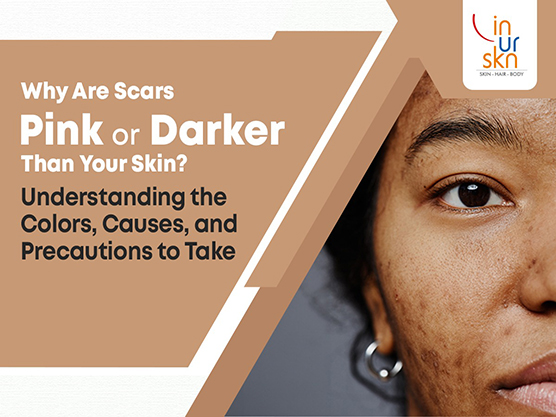
A scar can look pink, red, brown, purple, white or darker than the surrounding skin. These changes are usually part of natural healing, but the final look depends on the injury, skin tone and how the wound heals. Understanding scar color meaning helps you recognise normal changes and know when to seek advice.
So, what color are scars supposed to be? New scars are often pink or reddish, while mature scars may turn lighter or darker than nearby skin. Not every scar fades completely. At InUrSkn, identifying the cause and type of a scar is the first step toward suitable care. This guide explains why scars change colour, whether a pink scar is normal, and how to care for scars safely.
The Scar Colour Awareness Index
Colour alone cannot confirm normal healing. Consider age, texture, symptoms and changes over time.
| Scar Appearance | Possible Meaning | Recommended Approach |
|---|---|---|
| Pink or red | New scar tissue or ongoing healing | Gentle care and sun protection |
| Brown or dark | Increased pigmentation after inflammation or injury | Protect from sunlight; seek advice if persistent |
| White or pale | Reduced pigmentation in the area | Assessment if the change concerns you |
| Purple or deep red | May reflect the scar’s appearance and skin tone | Monitor changes and symptoms |
| Raised and discoloured | May indicate a hypertrophic scar or keloid | Dermatological assessment |
Source: American Academy of Dermatology (AAD) – Scars: Overview
Understanding Scar Colour Meaning and Skin Healing
A scar forms when the skin repairs damage beyond its superficial layer, and the new tissue can differ in colour, texture and flexibility. Early on, increased blood flow makes a scar look pink or red. As it matures, it may soften, become paler or turn darker, varying from person to person.
According to the NHS guidance on scars, scars can take up to two years or longer to fade, depending on the injury, wound care and individual healing.
What Colour Are Scars at Different Stages?
Pink or red scars. A pink scar is common in early healing. It may look slightly raised and usually flattens over time. However, persistent redness with increasing pain, warmth, swelling or discharge should not be assumed to be normal healing.
Source: AAD – Scars: Signs and Symptoms
Brown or dark scars. Pigmentation changes after inflammation or injury can leave a scar darker than surrounding skin, often more noticeably in medium and darker skin tones. A flat dark mark left after acne may be post-inflammatory hyperpigmentation rather than true scar tissue.
Source: AAD – Acne Scars: Signs and Symptoms
White or lighter scars. Some mature scars become paler because the healed area has less pigment. This is not necessarily unhealthy, but persistent or unexplained changes may need assessment.
Why Do Scars Become Pink or Darker?
- Inflammation and blood flow: Early redness reflects blood flow and tissue repair, and settles gradually.
- Skin tone and pigmentation: The same injury can heal differently across skin tones, leaving darker, paler or pink areas.
- Injury type and wound care: Incisions, burns, cuts and acne damage produce different scars; depth, location and aftercare all matter.
- Sun exposure: Ultraviolet light makes discoloured areas more noticeable; protect healed scars.
Source: NHS – Scars
Step-by-Step Expert Scar Assessment at InUrSkn
Assessment looks beyond colour alone:
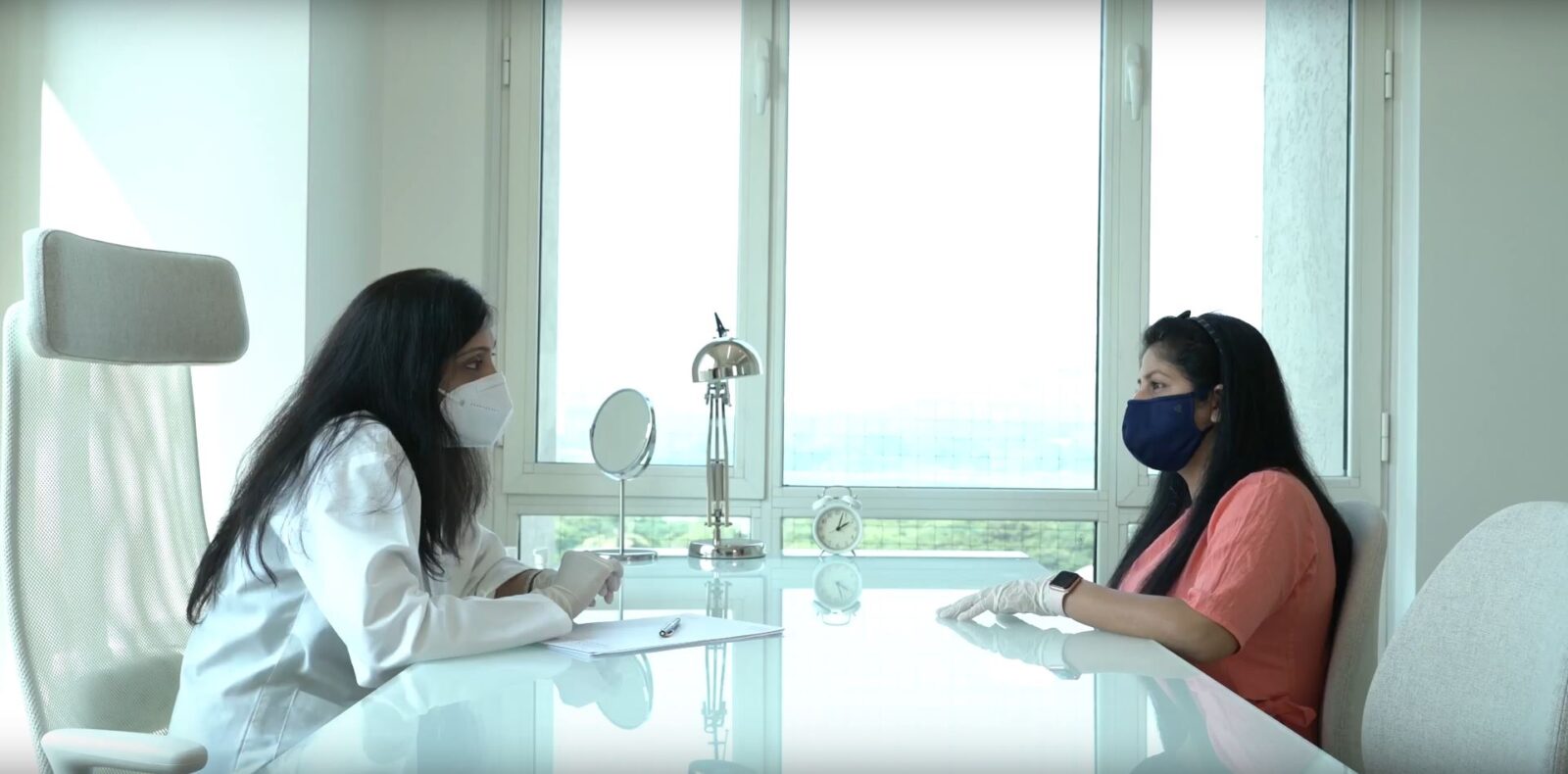
- Medical history: When the scar appeared, what caused it and whether its colour has changed.
- Skin examination: Colour, texture, depth, size and position.
- Symptom review: Itching, pain, tenderness, tightness or restricted movement.
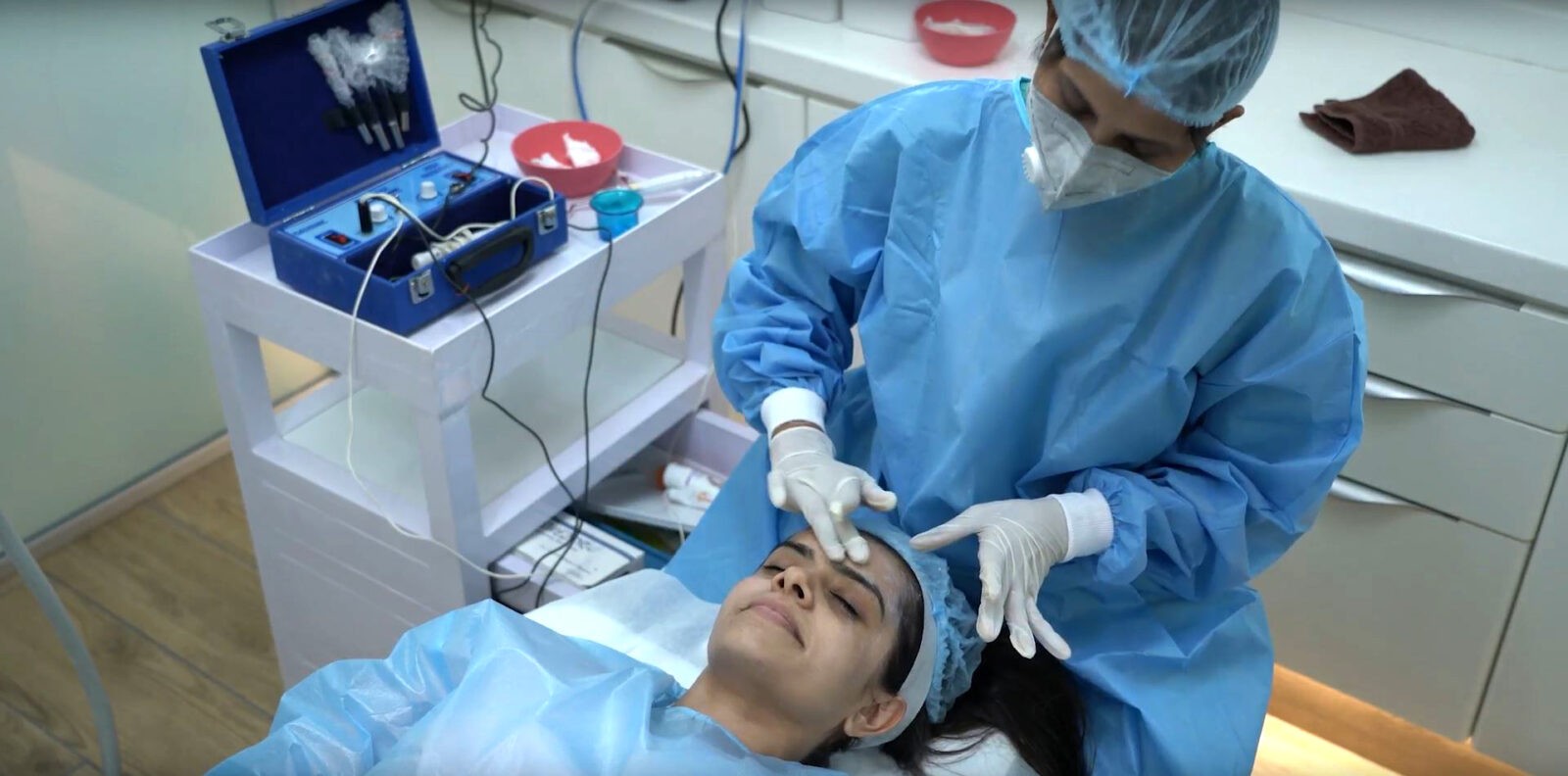
- Personalised care plan: Suitable home care or professional treatment for the scar and the individual.
Source: AAD – Scars: Diagnosis and Treatment
Scar Colour Profile and Targeted Care Guide
| Scar Type | Common Appearance | Care Considerations |
|---|---|---|
| Fine-line scar | Initially pink, later potentially paler | Gentle care and sun protection |
| Hypertrophic scar | Raised, firm, sometimes red | Professional assessment if persistent or uncomfortable |
| Keloid scar | Raised, may extend beyond the original wound | Dermatologist-guided treatment |
| Atrophic scar | Depressed or indented | Assessment for suitable scar treatments |
| Pigmented mark | Brown, red or darker than surrounding skin | Confirm whether it is pigmentation or a true scar |
These are general guides, not a way to diagnose a scar at home.
Source: NHS – Types of Scars
Are Scars Lighter or Darker Than Skin?
Both are possible. Scars may be lighter, darker or similar to surrounding skin, and colour alone does not show a scar’s depth or whether treatment is needed.
Scar Care: Home Care and Professional Treatment
For a fully healed scar, basic care may improve its appearance over time:
- Sun protection: Use broad-spectrum SPF 30 or higher on exposed scars.
- Gentle moisturising: Moisturise, and massage only once the wound is completely healed.
- Silicone products: Gels or sheets may help certain raised scars.
- Avoid irritation: Do not scrub, pick or apply harsh home remedies.
- Professional assessment: A dermatologist may discuss laser treatment, injections or other options.
No treatment can guarantee complete scar removal. Treatment aims to make a scar less noticeable or relieve symptoms.
Source: NHS – Scar Treatment and Care
Why Choose InUrSkn?
At InUrSkn, care is based on your skin, symptoms and goals. Colour is only one part of the assessment; texture, history and healing stage also matter.
Frequently Asked Questions (FAQ)
Q1. What is the scar colour meaning, and what does each shade say about how my skin is healing?
Pink or red usually points to blood flow and active repair, brown to extra pigment after inflammation, and white to reduced pigment. Texture, symptoms and age matter too.
Q2. What colour are scars supposed to be, and is there a “normal” shade I should expect?
There is no single normal colour. Scars may be pink, red, brown, purple, white or skin-coloured, and they shift as they mature. What matters is that the scar settles without worsening pain or swelling.
Q3. Is a pink scar normal, and how long can it stay pink before I should worry?
Yes. Pink is common in new scars because of increased blood flow, and it usually softens over months. Redness with increasing pain, warmth, swelling or discharge should be checked by a professional.
Q4. Are scars lighter or darker than skin, and why does the same type of injury heal differently in different people?
They can be either. Some lose pigment and look paler, while others gain pigment and look darker, especially in medium and darker skin tones. Injury depth, inflammation, pigmentation and aftercare all play a part.
Q5. Do dark scars fade on their own, and is a dark mark after acne the same as a true scar?
Many fade gradually, especially with sun protection. A flat dark mark after acne may be post-inflammatory hyperpigmentation rather than scar tissue, and it often lightens more readily. See a dermatologist if it stays unchanged.
Q6. Can sunlight darken a scar, and how should I protect a healed scar outdoors?
Yes. Ultraviolet exposure can make discolouration more noticeable. Apply broad-spectrum SPF 30 or higher to healed scars.
Q7. How long do scars take to fade, and why do some never fade completely?
Many scars take two years or longer to mature. Speed depends on the injury, scar type and your healing pattern, and some never fade completely.
Q8. Can scar creams or home remedies remove scars completely, or what can they realistically do?
No product can guarantee complete removal. Silicone gels or sheets may help certain raised scars, but the aim is to make a scar less noticeable or more comfortable. Avoid scrubbing or harsh remedies.
Q9. When should a scar be checked by a doctor, and which warning signs should not be ignored?
Seek advice if a scar becomes increasingly painful, warm or swollen, or produces pus. Also get it assessed if it restricts movement, changes unexpectedly, or appears with no known injury.
Q10. Can a dermatologist treat scar discolouration, and what options might they discuss?
Yes. A dermatologist first identifies whether it is a true scar or pigmentation. Options such as laser or injections depend on the scar type and your skin.
Conclusion: Understanding Scar Colour Supports Better Skin Care
Understanding scar color meaning explains why a scar may look pink, red, brown or lighter than surrounding skin. Knowing what color are scars expected to be is useful, but colour alone cannot identify the scar type. Gentle care, sun protection and patience may help, while persistent discomfort or unexpected changes deserve assessment.
InUrSkn encourages evidence-informed skin care and realistic expectations. If you are concerned about a pink scar or whether scars are lighter or darker than your skin, a qualified dermatologist can assess the cause and discuss suitable care.
About InUrSkn: InUrSkn creates educational content to help readers understand skin conditions, healing and dermatological care.
Medical Disclaimer: This content is for general education and is not a substitute for professional diagnosis or treatment. Consult a healthcare professional about a scar that is painful, changing unexpectedly or causing concern.





 Call us
 Book Appointment
 Enquire
 Location


